
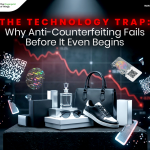

Over three decades in technology, first in telecommunications, now in brand protection, I have seen one pattern repeat itself with troubling consistency: we build systems to solve yesterday’s problem, while the threat has already evolved into something our frameworks cannot contain. Counterfeit alcohol in India is one such problem. And I believe it is time for our industry and policymakers to confront it with the seriousness it deserves.
I am not writing this as a vendor promoting a solution. I am writing this as someone who has spent the last several years working closely with brands, regulators, and enforcement agencies, and who has watched a preventable crisis deepen — not because people aren’t paying attention, but because the structural approach to solving it has been inadequate.
The Scale of the Problem in India
India is the world’s largest whisky market by volume and one of the fastest-growing spirits markets globally. The alcoholic beverage industry was valued at approximately ₹4.5 lakh crores in 2023 and is projected to reach ₹6.0 lakh crores by 2027, growing at a CAGR of around 7%.
Alcohol is also one of the most significant contributors to state excise revenues — in FY 2024–25, alcohol excise duty accounted for nearly 14% of states’ own tax revenues, with both Maharashtra and Uttar Pradesh collecting over ₹40,000 crore each, underscoring the sector’s growing fiscal significance across states.
But alongside this growth runs a darker parallel economy.
Analysis from FICCI CASCADE’s “Movement Against Smuggled & Counterfeit Trade: Building Resilient Economies and Implementing Robust Measures from a Global Initiative against Smuggling and Counterfeiting” (September 2024), based on FY 2022–23 estimates, indicates that the overall illicit market across key sectors in India has reached approximately ₹7.9 lakh crores, underscoring that illicit trade is not shrinking —it is scaling alongside the legitimate economy.
Within this, the illicit alcohol segment alone is estimated at over ₹66,000 crores, reflecting both the scale and the continued expansion of the problem.
This is not a rounding error. It is a structural revenue hemorrhage.
The illicit market thrives because of an environment that inadvertently enables it: high and uneven tax rates across states — in some cases exceeding 60% to 70% of the retail price —which creates a ready market for cheaper, often dangerous substitutes. High taxes, when not paired with effective control measures, can prove to be counterproductive. Bihar’s experience is instructive: alcohol prohibition in that state caused an estimated loss of ₹4,000 crores in excise revenues every year, while illicit trade continued to flourish and hooch deaths kept claiming lives year after year.
Key Statistics: India’s Illicit Alcohol Problem
₹6.0 lakh crores — projected India alcohol market size by 2027 ₹66,106 Cr — illicit alcohol market size (latest estimate) 22,000+ deaths recorded due to illicit liquor consumption over the past two decades, averaging over 1,000 lives lost every year (NCRB data)
Behind Every Statistic Is a Human Tragedy
The human cost of illicit alcohol is often highlighted through extreme incidents, but the deeper issue is more structural and less visible.
It lies in the growing circulation of counterfeit and refilled products that are designed to appear genuine. These products move through both formal and informal distribution channels, reach unsuspecting consumers, and directly undermine both brand integrity and consumer safety.
The persistence of deaths linked to fake or poor-quality liquor over the years reflects the scale of this broader systemic issue. These are not isolated failures. They are recurring outcomes of gaps in the supply chain (despite all existing safeguards) and how authenticity of the product is defined, implemented, and verified at the point of consumption.
The question worth asking is not whether the problem exists; it clearly does, but why current safeguards continue to fail where it matters most.
The answer, in my view, is structural. Our current authentication systems protect information about a product. They do not protect the identity of the product itself.
Why Existing Safeguards Fall Short
India has invested significantly in excise labels, holographic tax stamps, serialized QR codes, and supply chain regulations. These are important instruments of compliance, and I do not discount their value. But they share a common vulnerability: they authenticate a representation of a product, not the product itself.
Holograms can be closely approximated. QR codes can be cloned. Tax stamps — even sophisticated ones — can be illegally procured, reused, or counterfeited. In the absence of a physically unique identity embedded in the product, a determined counterfeiter only needs to study the surface layer of authentication and reproduce it convincingly.
There is also the challenge of bottle reuse, one of the most persistent and underappreciated threats in the Indian market. Genuine bottles of premium brands are collected, refilled with counterfeit liquid, resealed, and pushed back into circulation through secondary wholesalers, unlicensed retailers, and on-trade channels. The exterior looks authentic because, in a sense, it is. Only the contents are fraudulent. And by the time that is discovered, harm has already been done.
India’s fragmented, multi-layered distribution network compounds this risk. With multiple states each running their own excise frameworks, varying tax rates, and different levels of enforcement capacity, the opportunities for diversion and counterfeiting are significant. Products allocated for one territory are diverted into another. Unlicensed retailers co-exist alongside licensed ones, often indistinguishably. Brand protection strategies built for uniform markets fail in this complexity.
The Shift That Is Required
I want to be direct here, speaking to industry leaders and policymakers who share the responsibility for getting this right.
Compliance-oriented authentication — labels, stamps, codes — will always be necessary, but it will never be sufficient. The counterfeit ecosystem has evolved precisely because it knows how to operate just below the threshold of what our verification systems can detect. Each upgrade to the visible layer of security is eventually followed by a corresponding upgrade in the counterfeiters’ toolkit.
What is required is a fundamentally different architecture, one where the identity of each individual bottle is intrinsic and physically non-reproducible, not encoded in something that can be printed, scanned, or cloned. The technology to do this exists. It is not a concept; it is deployable today, at scale, in the Indian market.
At Checko, we have developed what we believe is the world’s first and only 3D unclonable tag — originating from years of research at the National Centre for Flexible Electronics at IIT Kanpur. Each tag carries a naturally unique microstructure, like a fingerprint, that cannot be manufactured twice. An AI-powered app enables quick and easy verification by anyone, anywhere, any timeno special hardware, no complex processes, just a smartphone.
But this is not a product pitch. The broader point I want to make is about the direction the industry needs to move in, regardless of which specific technology is adopted. Authentication must become intrinsic, not cosmetic. And it must function at the level of the individual unit — not the batch or the shipment.
A Call to Industry Leaders and Policymakers
I would urge the leaders of our industry — and the policymakers who shape its regulatory environment — to consider the following.
First, authentication standards must evolve beyond representational security. The question to ask of any authentication technology should not only be “can it be verified?” but also “can it be duplicated?” If the answer to the second question is yes, the protection is incomplete.
Second, item-level traceability is the future of supply chain integrity. Batch-level controls were designed for a different era of distribution. In today’s environment — where diversion can happen at the level of a single pallet or even a single bottle — brand protection must be granular enough to detect anomalies at the unit level.
Third, and perhaps most importantly, the goal of brand protection must be reframed. Today, it is often approached primarily as a revenue protection problem. That framing is understandable, but incomplete. When counterfeit alcohol reaches a consumer, the immediate harm is not to the brand’s revenue — it is to a human being. Consumer safety must be the primary design criterion for any authentication system, not an afterthought.
Closing Reflection
Thirty years in technology has reinforced one conviction: the most important problems are not solved by incremental improvement to existing systems. They are solved by stepping back, understanding the root cause of failure, and redesigning from the ground up.
The root cause of counterfeit alcohol’s persistence is not insufficient enforcement or inadequate penalties. It is that our authentication systems have been built around a flawed premise — that security embedded in visible, transferable identifiers is adequate protection in a world where those identifiers can be copied.
India’s alcohol industry and its regulators have the expertise, the institutional capacity, and increasingly the technological options to solve this problem. What is needed now is the will to move beyond compliance thinking toward genuine protection thinking.
The people affected by counterfeit alcohol, often invisible in mainstream discourse, deserve no less.