

Introduction
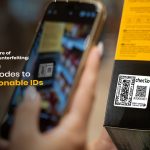
QR codes have become ubiquitous in modern supply chains. From restaurant menus to medicine packs, these square pixelated patterns are everywhere. Regulators, brands, and even governments have increasingly turned to QR codes for product verification, often under the assumption that they can serve as anti-counterfeiting tools. However, while QR codes are excellent for automation and traceability, they are fundamentally incapable of providing authentication. This blog explores the architecture of QR codes, their limitations, and why counterfeiters can easily exploit them.
1. How a QR Code Works
A QR code is essentially a two-dimensional barcode. It is a grid of black and white squares (modules) arranged in rows and columns, with special patterns at the corners to help scanners detect orientation.
- Each black or white square encodes a binary value (0 or 1).
- The entire grid represents data such as text, numbers, or a URL.
- Smartphones use their cameras to capture the image, then decode it with error-correction algorithms.
- If the data contains a URL, the phone redirects to that website automatically.
In other words, a QR code is not “intelligent.” It is just a translation of human-readable information (like a web address) into machine-readable form. The actual “intelligence” lies in the application that interprets the data.
2. Why QR Codes Fail at Authentication
A QR code can be cloned perfectly because it is nothing more than a printed pattern of black and white squares. If a counterfeiter copies the original QR code and prints it on a fake product, scanning it will return the same data as the genuine one.
This leads to two critical problems:
- Cloning Vulnerability
- Phishing Risk
Thus, QR codes introduce a new layer of risk instead of eliminating counterfeits.
3. The Illusion of “Dynamic” and “Encrypted” QR Codes
Many companies market dynamic or encrypted QR codes as anti-counterfeiting solutions. In reality, these terms are misleading.
- Dynamic QR Codes: The data in the code points to a redirectable URL. While the destination can change after printing, the QR code itself remains static. If copied, the clone behaves identically to the original.
- Encrypted QR Codes: Here, the embedded data is encrypted. But decryption happens in the app, not in the QR code. If the code is cloned, the decryption process still yields the same information.
In both cases, the fundamental flaw remains: the QR code itself is easily duplicated.
4. Traceability ≠ Authentication
QR codes are highly effective for traceability—logging where and when a product moved through the supply chain. However, this assumes honesty in the system. If a counterfeit item carries a cloned QR code, it will be logged into the same system as genuine products, corrupting the traceability data.
The confusion arises because QR codes often display detailed product information when scanned. To consumers, this “feels” like authentication. In reality, it is only a reflection of stored data—not proof of genuineness.
5. Regulatory Missteps
Governments and regulators have, in some cases, mandated QR codes as anti-counterfeiting measures:
- In pharmaceuticals, QR codes are proposed for detecting fake drugs.
- In excise tax stamps, QR codes are used for alcohol traceability.
While these measures improve transparency, they do not prevent counterfeiting. A fake product with a cloned QR code still passes the system undetected. This misrepresentation has allowed counterfeiters to continue exploiting gaps under the cover of compliance.
6. The Path Forward: Beyond QR Codes
To achieve real protection, QR codes must be supplemented with authentication technologies that cannot be cloned:
- Physically Unclonable Functions (PUFs): Random, naturally occurring 3D micro-patterns that serve as unique “fingerprints” for products.
- Unclonable Tags + Smartphone Algorithms: Systems where a mobile app can verify the product’s fingerprint reliably in real-world conditions.
- Hybrid Systems: Combining QR codes for traceability with unclonable tags for authentication.
This layered approach ensures both supply chain visibility and counterfeit protection.
Conclusion
QR codes are powerful tools for automation, logistics, and consumer engagement. But they are not and cannot be a solution for counterfeiting. At best, they provide traceability; at worst, they create a false sense of security while remaining vulnerable to cloning and phishing. True anti-counterfeiting requires unclonable identifiers and robust authentication mechanisms. Until this shift is made, QR-code–based “authentication” will remain a dangerous illusion.